
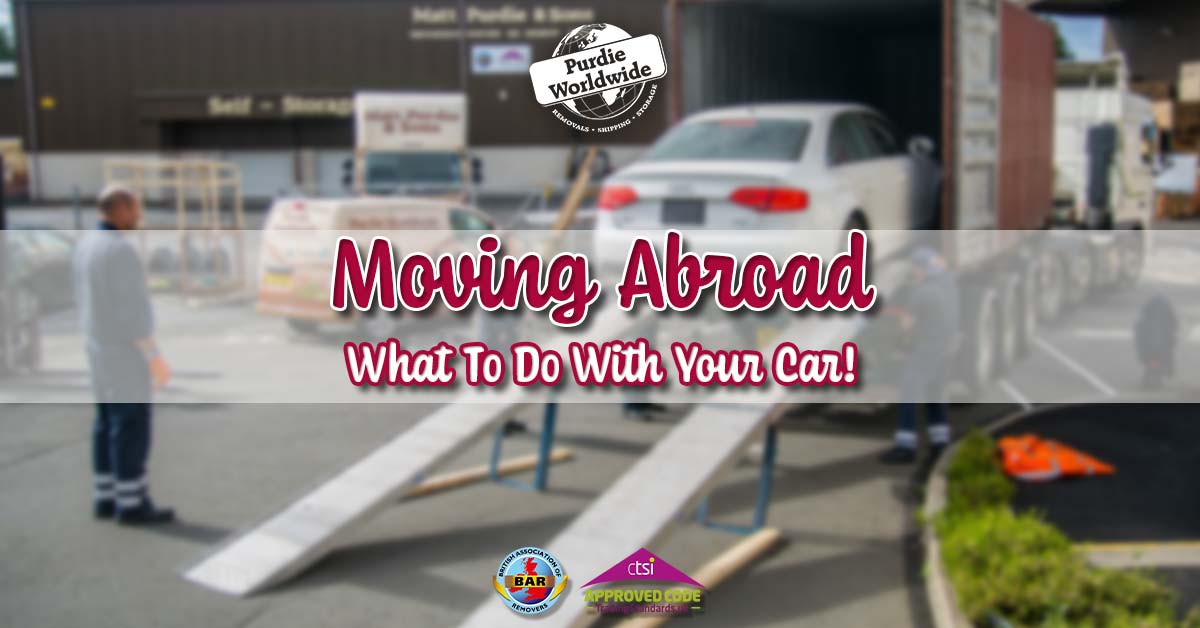
Planning an international move involves far more than packing boxes and booking flights. One of the biggest practical decisions many people face is what to do with their car when moving abroad.
Should you take it with you, sell it before you leave, put it into storage, or leave it with family? The right answer depends on your destination, the value of your vehicle, how long you’ll be away, and local import regulations.
At Purdie Worldwide, we help individuals and families relocate overseas every day. Here’s a clear guide to help you decide what to do with your car before you move.
Option 1: Take Your Car With You
If you’re relocating permanently, especially to a country where right-hand drive vehicles are common (such as Ireland, Australia, New Zealand, or some parts of the Caribbean), shipping your car may be a sensible option.

Before deciding, check:
- Import taxes and duties
- Vehicle age restrictions
- Emissions and safety standards
- Whether your UK model is approved for use in the destination country
- The cost of shipping compared with buying a vehicle locally
For some destinations, importing a car can be straightforward. For others, taxes and compliance costs can make it uneconomical.
Documents you’ll usually need
- V5C logbook
- Proof of ownership
- Passport
- Proof of address
- Shipping documentation
- Insurance details
It is important to research the rules for your specific destination well in advance, as customs requirements can vary significantly.
Option 2: Sell Your Car Before You Move
For many people, selling the car is the simplest and most cost-effective solution.
Selling is often best if:
- Your move is permanent
- The vehicle is older or of relatively low value
- Importing would be expensive
- You plan to use public transport or buy a different vehicle abroad
Tips for getting the best price
- Have the car professionally cleaned
- Gather service records and MOT certificates
- Fix any minor cosmetic issues if cost-effective
- Compare offers from dealerships, online buyers, and private buyers
Remember to notify the DVLA once the vehicle has been sold. You can do this online, and any remaining vehicle tax is normally refunded automatically.
Option 3: Put Your Car Into Storage
If you’re moving abroad temporarily — for a work assignment, military posting, study programme, or extended travel — storing your car may be the best option.
Long-term vehicle storage works well when:
- You expect to return to the UK
- The car has sentimental value
- It would be expensive to replace
- You want to avoid selling and buying twice
How to prepare a car for storage
- Wash and dry the vehicle thoroughly.
- Fill the fuel tank to reduce condensation.
- Check tyre pressures.
- Disconnect the battery or use a maintenance charger.
- Remove valuables and important documents.
- Use a breathable car cover if the vehicle is stored indoors.
Secure indoor storage is generally preferable to leaving a vehicle unused on a driveway for months at a time.
Option 4: Leave It With Family or Friends
Some people choose to leave their car with a trusted family member who can use it or keep it maintained.
If someone else will be driving the vehicle, make sure:
- They are correctly insured
- The MOT remains valid
- Vehicle tax is paid
- Any servicing requirements are kept up to date
Avoid informal arrangements where the vehicle is used regularly without proper insurance, as this could cause complications if an accident occurs.
What About Insurance?
Your UK car insurance will not usually provide long-term cover once you become resident overseas.
If you ship the car abroad
You will normally need:
- Marine/transit insurance during shipping
- Local vehicle insurance in your destination country
If the car stays in the UK
You may be able to switch to a laid-up, storage, or SORN-friendly policy, which is often cheaper than standard road insurance.
Always speak to your insurer before leaving the UK.
Do You Need to Declare the Car to the DVLA?
If your vehicle will not be used on public roads in the UK, you can make a Statutory Off Road Notification (SORN).
SORN is appropriate when:
- The car is in storage
- It is kept on private land
- Nobody will be driving it on public roads
This can help you avoid paying vehicle tax while the car is not in use.
Permanent Move vs Temporary Move
Here’s a quick comparison:
| Situation | Best option |
|---|---|
| Permanent move abroad | Sell or ship the car |
| 1–2 year work assignment | Secure storage |
| Studying overseas | Storage or sale |
| Retiring abroad | Usually ship or sell |
| Extended travel / gap year | Storage |
A Common Mistake: Leaving It Until the Last Week
One of the biggest mistakes we see is leaving the car decision until just before departure.
Selling a vehicle can take time, shipping requires documentation and customs preparation, and storage facilities may need advance booking. Ideally, decide what you’ll do with your car 4–8 weeks before your moving date.
How Purdie Worldwide Can Help
An international move involves many moving parts — household shipping, customs paperwork, storage, insurance, and logistics. While your car is only one piece of the puzzle, making the right decision early can save considerable stress and expense.
Purdie Worldwide has decades of experience helping customers move overseas smoothly and securely. Whether you’re relocating for work, family, retirement, or a new adventure abroad, our team can help you plan every stage of the move.
Get in touch with Purdie Worldwide today for expert advice on international removals, shipping, storage, and overseas relocation services.


